
Sign up to our DirectorPlus newsletter
Subscribers get the best engineering leadership content in their inbox every month.
Newsletter archive

AI agents and the missing link in DevOps
AI agents aren’t just assistants anymore – they’re making decisions. Are engineers ready for the shift or are they just too skeptical?

Carving out time for large-scale engineering chores
Determine what to prioritize, set out a path, and be prepared for some hiccups along the way.

Encouraging a passion for productivity
In this edition of DirectorPlus, Neha Batra, VP of Engineering at GitHub, explains how she creates a culture of productivity.


Framing AI rollouts in the right light
How can you introduce AI into teams in a way that doesn’t invite unrest within your org? It starts with presenting it in the right light.
Latest
-
Think the technical interview is dead? Think again
The technical interview is evolving as AI-assisted coding becomes the norm.
-
The latest tech layoffs have all the hallmarks of AI washing
Looking closer at the latest Block and Atlassian layoffs.
-
AI adoption has to be driven from the top
Not by mandate, but clear leadership and guidance over why AI is being adopted.
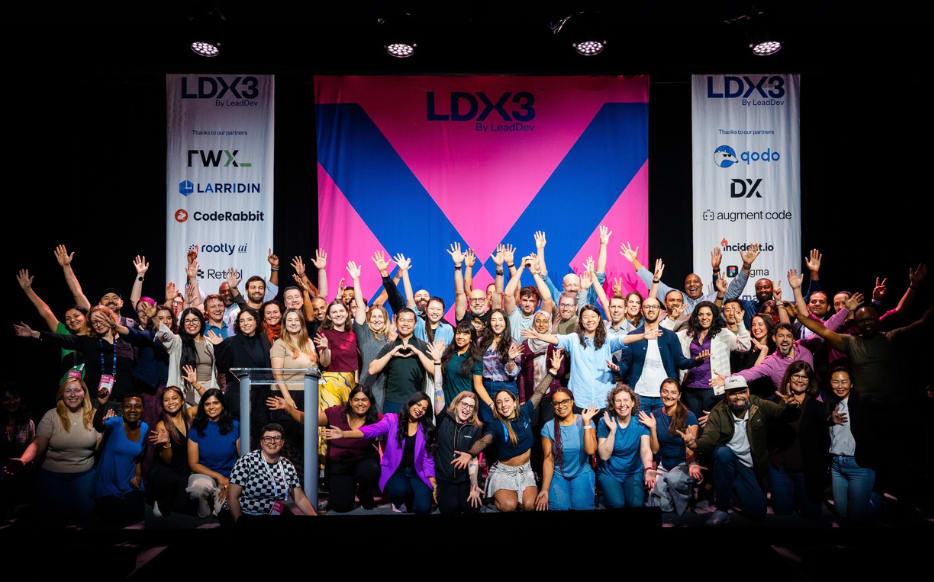
New York • September 8 & 9, 2027
Loved LDX3 New York? Pre-sale tickets for 2027 are now available.
Essential reading

What is a Director of Engineering? The glue keeping engineering together
A director of engineering is responsible for keeping an entire engineering function humming. Find out what skills you need to climb the ladder to this vital position.

On our DirectorPlus playlist

Strategies to hone commercial awareness and drive business outcomes
Learn effective strategies for enhancing commercial awareness in tech teams, turning engineering into a business driver through alignment, impactful initiatives, and stakeholder engagement.

The path from Director to CTO: How to follow it, or how to mentor it
This talk is aimed at both aspiring Chief Technology Officers and those who are in a position to mentor future CTOs. Explore the journey from a Director of Engineering role to a CTO, focusing on the skills and experiences needed for this transition and how experienced leaders can guide others on this path.

Making the manager of manager’s mindset
Suzan Bond covers the difference between the two roles and the key mindset shifts leaders need to make to manage managers.




2027 pre-sale tickets are live!
Join the conversations next year. Book now to secure the lowest price.
London • June 28 & 29, 2027
More for managers of managers
-
Crafting the perfect LeadDev talk submission
Crafting the best version of your talk proposal for the LeadDev stage with the help of ChatGPT.
-
Harness acquires Qwiet AI to combat AI-generated code risks
This merger is set to help address hidden security risks with the help of AI-assisted coding.
-
The AI productivity myth is more harmful than you think
Perceived productivity may be up thanks to AI, but there’s debt collecting in the shadows.
-
Lessons learned launching an MCP server
Steps you can follow if you’re thinking about launching your own MCP server.
-
Why the UK was named top global tech growth hub
But funding hurdles and regulatory costs could stall the momentum.
-
Ethics are being forgotten as the AI race heats up
Is the tech industry capable of the change needed to curb ethical and environmental concerns?
-
Turning multi-agent AI into strategic business leverage
Using AI to help bolster business strategy, not just for the sake of it.
-
Motivating your team when promotions are frozen
Keeping motivation high during a period of uncertainty can be difficult. Here’s how to turn it around.
Videos for managers of managers
-
 In partnership with Swarmia
What successful engineering organizations do differently with AI
Learn how leading engineering organizations measure AI ROI, improve team effectiveness, and turn growing AI investments into business value.
-
AI-powered code review at scale
Discover how one team scaled trusted AI code review across 200+ engineers for just $200 a month.
-
Burnout: A team failure mode
Reframe burnout as a systems failure and apply SRE principles to build sustainable, high-performing engineering teams.
-
The hallucination crisis: Who owns agentic AI outcomes in production?
An AI hallucination exposed a critical accountability gap and inspired a governance playbook for safely deploying high-stakes automation.
-

3‑step mental fitness for engineering leaders
A practical mental fitness framework to help engineering leaders reduce stress, build resilience, and lead their teams more sustainably.
-
 In partnership with CodeRabbit
After the agents write the code
Discover how CodeRabbit cleared four critical bottlenecks to ship 10x more software with AI agents, without compromising quality or security.
-
Escaping the AI speed trap
Move beyond token spend and code volume to measure AI’s impact on decisions, learning, and organizational capacity.
-
Shipping AI products that pay off: Lessons from the messy middle
Turn promising AI demos into reliable products through shared infrastructure, embedded evaluation, and business-focused experimentation.
-

AI-native development: How to actually get the most out of your agents
This talk covers spec-driven development as a way to give agents better constraints, large language model (LLM) gateway and routing strategies for managing which model handles which task, test-driven development adapted for an agent-first workflow, and verification practices built for the volume and pace of AI-generated code.
-

The first rung: Where the next generation of engineers will come from
A look at how apprenticeship can help engineering leaders develop the next generation of technical talent for an AI-enabled world.
-

Beyond CI/CD: How platform abstractions unlocked developer productivity at scale
In this talk, I will share how our platform engineering team made a deliberate investment to simplify service-to-service connectivity by introducing uniform platform abstractions and out-of-the-box discovery.
-

You’re already building a software factory
This session will give you a blueprint for building out your team’s factory, both technically and organizationally.