
You have 1 article left to read this month before you need to register a free LeadDev.com account.
Estimated reading time: 9 minutes
Key takeaways:
- Principal engineer is a leadership role, not a promotion.
- The job is influencing people toward the right decisions, not solving technical challenges in isolation.
- AI changes how the work gets done, not what the job is: senior technical judgment on innovation vs. safety becomes more valuable, not less.
This is a blog post I wrote in 2019 and it’s been my most popular post that I still get questions about. The industry has since changed a lot and is still very much in a state of rapid flux. Now, my role is a senior architect and I work with numerous new and aspiring principal engineers. This has matured my view on that role. Here is a revamped version with years of experience between then and now.
I bought and read The Manager’s Path by the awesome Camille Fournier when it first came out and I was a senior database engineer aspiring to become a principal engineer in my organization.
At the time, principal engineer and software architect were manager and director level roles respectively, without having direct reports. We had just overhauled the career ladder to provide a full technical ladder, and I now had the opportunity to grow where people management wasn’t a requirement.
It is not that I disliked management or that I thought it was easy work. To the contrary, I very much appreciated the complexity of people management, but I felt that I wanted to strengthen my technical expertise and solidify my career as an individual contributor (IC) before considering that trajectory.
Since then, the Staff Engineer Path has come out, further solidifying this impactful senior IC track in the industry. Fast forward a few years, and after experiencing the principal/staff engineer space and the preparation I got from Camille’s and Tanya’s books, I have a better understanding of what each of these management titles mean and what differentiates a manager from a director ora VP.
I also realized that while I am still an IC, the principal+ engineer role carries enough cross-organization work and enough people skills to make it much closer to management than it may seem, just without engineers reporting directly to me.
Your inbox, upgraded.
Receive weekly engineering insights to level up your leadership approach.
Career ladders and the myth of a flat org
Despite noise about flat orgs in the post-Zero Interest Rate Policy (ZIRP) era, I still firmly believe in the importance of a well-structured org. Some organizations have again started to claim to be ‘flat.’
I think that can only apply to organizations that are no larger than a small handful of individuals. They may claim or even believe that they are not encumbered by the politics of titles and organizational hierarchy, but that simply means that the power structure is there but not based on clear milestones or competencies.
When engineering teams grow past a handful of people, the engineering leadership has to document explicitly what they consider the competencies of a senior engineer to be and not leave that up to interpretation. Implied competencies are easily colored by personal bias, both implicit and explicit. These biases are a quick way to lose competent engineers.
Principal. not more-senior senior
As companies hit growth stages, the easiest first move is adding ‘senior’ in front of engineer. However, when retention is good and engineers stick around, a two-rung ladder quickly runs out of road, and that’s when titles like ‘staff’ and ‘principal’ start appearing on the career ladder.
Principal engineer should not be seen as a natural progression to senior engineering levels as it is not an extension of a junior IC position. It is a role that is on a different playing field requiring competencies that no longer apply to only technical prowess.
For an engineer to get to the principal level, there needs to be cross-organizational, collaborative signals along with a clear understanding of architecture and design decisions that go far beyond the immediate technical area of expertise.
Taking it further
Depending on the size of the engineering org and the sprawl of products the company sells you start needing more of those strategic thinker and senior ICs .
Since first writing this post, we have started to see architects, senior architects, and even distinguished engineers (ICs that are VP level). It may seem like this is a case of ‘titles for titles sake’ (and maybe in some toxic pockets it is), but it is an acknowledgment of needing a strong technical direction at all layers that is explicitly driving quality of technical decisions, aligning on the philosophy and principles that drive trade off decision-making across a large engineering org, and providing the bench for that technical muscle from principal engineer all the way up to CTO.
Just like I said above that “principal engineer is not a natural progression from senior engineer,” none of these levels carry a natural progression. They carry widely different scopes, partner with very different levels of the org, and are expected to drive very different levels of impact.
A distinguished architect, for example, is a peer to a VP of engineering. That means they have to work as partners to drive quality, delivery, and major launches across an engineering org of (usually) at least a few hundred. That is no small feat.
More like this
A culture multiplier
Once I became a principal engineer, it quickly became clear to me that my job involved a lot more than closing tickets and writing code to achieve things. Yes, I am still a maker not a manager, and I don’t have anyone reporting to me, but my new role now includes leadership duties. It would be a mistake to not be explicit about these duties or their importance to business outcomes.
One of the most important competencies of a principal engineer is to become a force multiplier. This is a more mature definition of ‘10x engineer’ than what the Silicon Valley ‘cargo cult’ likes to use.
A principal engineer does not produce 10x the features or fix 10x the tech debt tickets. A truly valuable principal engineer makes their whole team better by advocating for best practices, gently reminding people of why the processes we have exist, and helping the less experienced engineers find ways to ‘level up.’
They can speak to technical aspects of the product, connect planned work to business strategy and to what makes the company more successful, and, maybe most importantly, they have the interpersonal skills to influence others around them towards these goals.
This is why promoting any engineer to principal without demonstrative skills in more than just ‘the code’ would be a disservice to the team, and highlight to the rest of the organization what management actually values when it comes to the non-managerial career track.
If you want to watch and see how the ‘brilliant jerk’ anecdote came to be, it is the promotions to senior IC titles that are based solely on code output, and not on the value that interpersonal skills can bring.
Leader, even without directs
One thing that The Manager’s Path especially focuses on explaining is “what does that person do, anyway?” It lays that out by showing at what point a ‘manager’ changes focus from the day to day tactical work to the long term strategy. For staff+ engineers this means ensuring the work is defined well enough for their management peers to ultimately deliver work of value, not just ‘busy work.’
Managers carry a responsibility towards running the work cadence, making sure teams are making reasonable commitments they can deliver on. The senior IC staff owns defining what good looks like and breaking it into consumable pieces for their less senior engineers so they can facilitate the road to delivery.
When working at the senior engineer level, the focus is more on “getting tickets/projects done with little to no direction” and “being proactive in fixing tech debt or helping solve problems/bugs.”
However, once I became a principal, it became clear that by virtue of being one of a few, I now carried a larger impact on morale, culture, and carrying the definition of a good technical outcome. This pairing carries on for each peer level between IC and management up the org chart.
Are you a manager?
A few years ago I was where a lot of senior engineers (maybe more the women than the men) tend to be: at a fork in the road. Do I become a people manager or do I stay in a technical IC role and focus on solving technical problems?
Trick question! Once you reach a certain level, all problems are solved by people. There is no such thing as a purely technical problem. In fact, this is the level where one wishes more problems were code-based because we can make code do a lot of things, but making people do things is harder and influencing people to do what we want is harder still. This is what principal engineering is about.
The role is far less about solving intricate technology problems (although there is that too) and more about being a good influence; convincing the rest of the technical team why a given business problem should be solved with one solution versus another. Of course, there is still a lot of problem-solving in motivating people, and we need to find the right message for each audience while still working towards the key business goals.
What about AI?
It is hard to address topics like this in the year of our lord 2026 without addressing the role of large language models (LLMs) and coding agents. For day to day ticket ICs we are already seeing the change in the job where engineers pair a program with an LLM of choice and ostensibly increase the velocity of their deliverable (the jury is out on this but that’s the hypothesis at least).
What does that mean for senior ICs who live in the land of tradeoffs and strategy and aren’t writing code and deploying it to production daily? So far, my opinion of LLMs as part of my job has evolved to “this is not too far off from when Kubernetes first came out or when even Chef and Puppet came out.” That means that this is yet another cycle of something that changes how we do things but not what the job is.
The outcomes we seek are the same. I very much recommend my peers to use these tools for tedious tasks such as “digging into piles of data” or “creating initial proof of concepts to test a thesis.”
If anything, the explosion of LLM use makes our role as senior technical leaders who ‘have seen some things’ even more important for setting the balance of innovation and safety in our organizations.
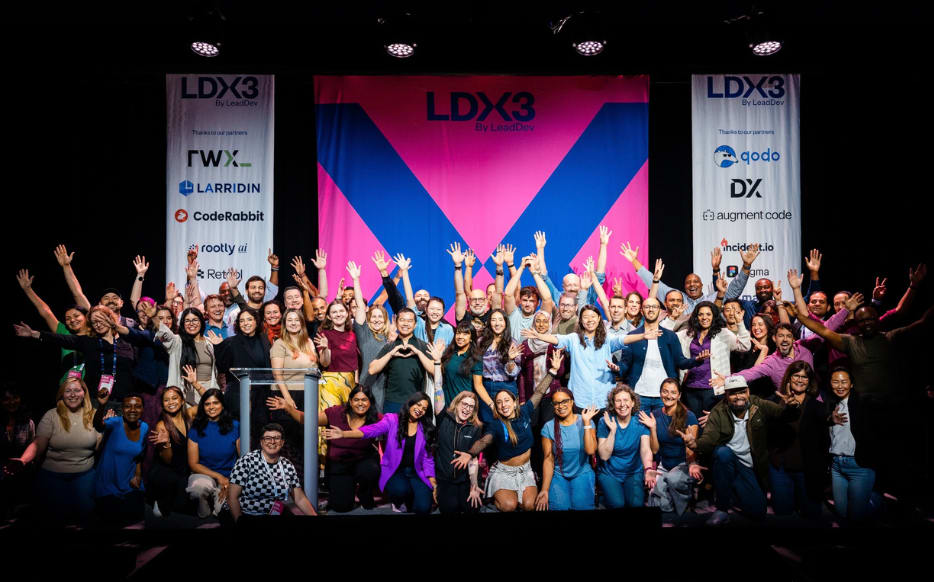
New York • September 8 & 9, 2027
Loved LDX3 New York? Pre-sale tickets for 2027 are now available.
What’s next for principal engineers?
I have since moved up the IC ladder to architect and now senior architect. With that came also an expansion of my scope well beyond just data stores. I now have a wider lens to focus on all things reliability for my company.
I still firmly believe in the importance of this dedicated IC ladder the same way I did back in 2019 when I first wrote this. In fact, it has been a positive change to see this become more normalized and invested into.


