
You have 1 article left to read this month before you need to register a free LeadDev.com account.
Estimated reading time: 6 minutes
Key takeaways:
- No PhD required! 250,000 quantum jobs expected by 2030, most needing only a bachelor’s degree.
- It’s a different way of thinking, not a new library. Expect two years before real proficiency.
- AI is pulling the quantum timeline forward, which means more engineering jobs, not fewer.
For those in the technology industry, it can feel hard to escape from AI. It’s at the center of the technological universe, with most major advancements, opportunities, and funding focused on its development. In the background, quantum computing is making strides with the funding to match, creating an alternate opportunity for technologists.
The US, Europe, the UK, and China are all vying for leadership in quantum computing, upping the ante in their commitments toward quantum development. In June, US President Trump signed two executive orders related to speeding up the country’s development of quantum computing, noting the country is “going to be investing in American quantum leadership like never before.”
In the UK, before the Labour leadership change, minister Liz Kendall said the UK government must learn lessons from the US’s dominance in the AI race, while announcing a £1billion ($1.36 billion) pledge for quantum.
Public funding commitments for quantum research increased by more than $12.7 billion last year, according to QED-C’s State of the Global Quantum Industry 2026 report, while private venture capital investment hit $4.9 billion, more than doubling the previous year’s record high. The surge of interest in quantum and recent breakthroughs have resulted in a flurry of firms going public within the last year.
Your inbox, upgraded.
Receive weekly engineering insights to level up your leadership approach.
The state of quantum computing
Quantum computing leverages the laws of physics to perform select applications at faster rates. Commercial opportunities where there could be advantages include the optimization of machine learning, simulation of material and chemical science systems, and also derivative and risk pricing calculations in financial services, says Scott Buchholz, quantum computing lead at consulting firm Deloitte.
The challenge is that general-purpose quantum computers can’t yet run production workloads, Buchholz says.“It turns out that it’s fiendishly difficult to manipulate individual atoms and get them to cooperate,” he says.
There have been significant advances in error correction, the process of protecting quantum data from errors and noise, which is key to moving toward commercialization. Now the industry’s focus is on how to do error correction during computation and scaling computation, says Joe Fitzsimons, founder and CEO of software infrastructure company Horizon Quantum.
“Leading-edge devices have a few thousand qubits, but for commercial-scale quantum computing, we’ll need each device to have hundreds of thousands or millions of qubits,” Andrew Dzurak, CEO and founder of quantum computing firm Diraq, tells LeadDev.
Qubits (quantum bits) are the quantum version of the classic computing bit and enable quantum computers to do more advanced calculations because of their ability to represent multiple states simultaneously.
Pranav Gokhale, CTO and co-founder of Infleqtion, a company focused on neutral-atom quantum computers, is projecting that quantum computing will enter the realm of scientific utility by 2028, and by 2030 will start to become more commercially relevant.
However, Murray Thom, VP of quantum technology evangelism at quantum computing firm D-Wave, argues that quantum is already commercial and that businesses and developers are being given “mixed messages.”
Don’t you need a PhD?
As quantum computing scales and moves toward commercial use cases, PhD researchers will make up only a fraction of the workforce, says Diraq’s Dzurak.
“The numbers make this clear: there were around 16,500 quantum professionals worldwide in 2025, and that’s projected to reach 250,000 by 2030. No doctoral pipeline can fill that gap, especially when quantum is competing with AI, biotech, and semiconductors for the same talent,” he says.
This shift away from accepting only PhD candidates is already underway. Research from the Chicago Quantum Exchange found that, in 2022 and 2023, 55% of quantum jobs only required a bachelor’s degree, an Associate’s degree, or did not require a degree at all.
More like this
Breaking into quantum computing
That said, don’t expect an easy ride. Deloitte’s Buchholz sent both a software engineer and a data scientist to a training program for programming quantum devices, and they found it much harder than expected. It takes most people two years of dedicated effort to start becoming proficient at programming these devices, he says. “It’s not like picking up a new software library. It’s really like learning a completely new way of approaching problems,” he adds.
Gokhale appreciates when candidates understand it’s a completely new approach; for example, the knowledge that copying data is forbidden – known as the no-cloning theorem – which means the architecture of software and algorithms in quantum can look different because of this constraint.
“We like to see when software engineers are wrestling with the underlying, almost philosophical, realities of quantum computing and propagating that into the way they reason about engineering and about software programs,” he says.
Having a background or an interest in a low-level programming language is also attractive, Gokhale says. He expects a lot of demand for talent with experience in embedded systems and FPGA programming because they are among the key drivers of progress.
A common mistake developers make is thinking they should know all the quantum frameworks such as Qiskit and PennyLane, Fitzsimons says. “What matters is understanding what the system actually does, what quantum computation actually is, what the state vector is, what each of the gates is doing, and so on.”
It’s also important to have some comfort with math, in particular linear algebra, because it is the basis for a lot of quantum calculations, Buchholz says.
A new program, Quantum For Programmers, recently launched, aiming to make quantum programming feel like regular software development.
Career opportunities for software engineers
As the commercial opportunity grows, Dzurak expects cryogenic installation and maintenance to become a specialized field with its own training pathways, certifications, and career progression.
There will also be opportunities beyond startups. IQM’s State of Quantum 2026 report finds that enterprise engagement with quantum computing is now widespread, with 89% of surveyed organizations reporting hands-on activity, while only 13% report production deployment.
“In many medium- and large-sized companies, there’s at least somebody asking questions about [quantum], and it might be that people don’t actually need to go somewhere else to find the opportunity to work on things,” says Buchholz. “They might need to find that person in their organization who is trying to figure out what should be done.”
The real-world applications that are moving into production are being built by software engineers who are experimenting with the technology and addressing pain points, Thom says.
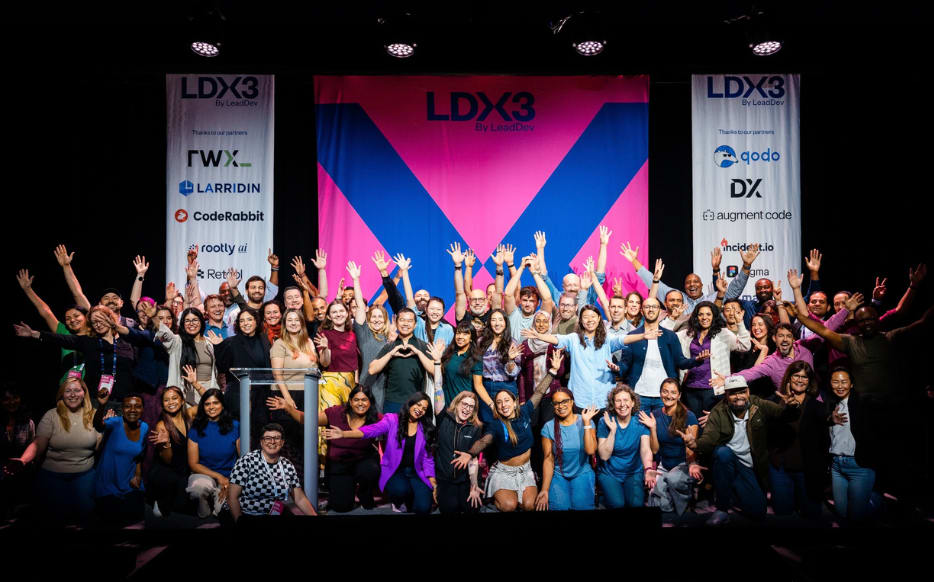
New York • September 8 & 9, 2027
Loved LDX3 New York? Pre-sale tickets for 2027 are now available.
The AI threat?
Quantum computing isn’t, however, an AI-free zone. Gokhale is seeing AI supercharge the capabilities of his engineering teams, but this results in needing more engineers, not less, as it pulls forward the timeline for quantum computing, he says.
AI is bringing efficiencies, but it’s not quite there yet in terms of generating high-quality quantum code because it hasn’t seen billions of lines of quantum code, and what it has seen is much lower quality, Fitzsimons says.
Working in quantum now is akin to working on the first PCs or the early days at Apple, he adds. It’s an attractive proposition for developers, he says, because they get the chance to relive the computing revolution; they get to work on new problems with different constraints while using the history of conventional computing as a guide.
“It’s the time when there is the opportunity to really have a large impact on an emerging field,” he says.