Register or log in to access this video
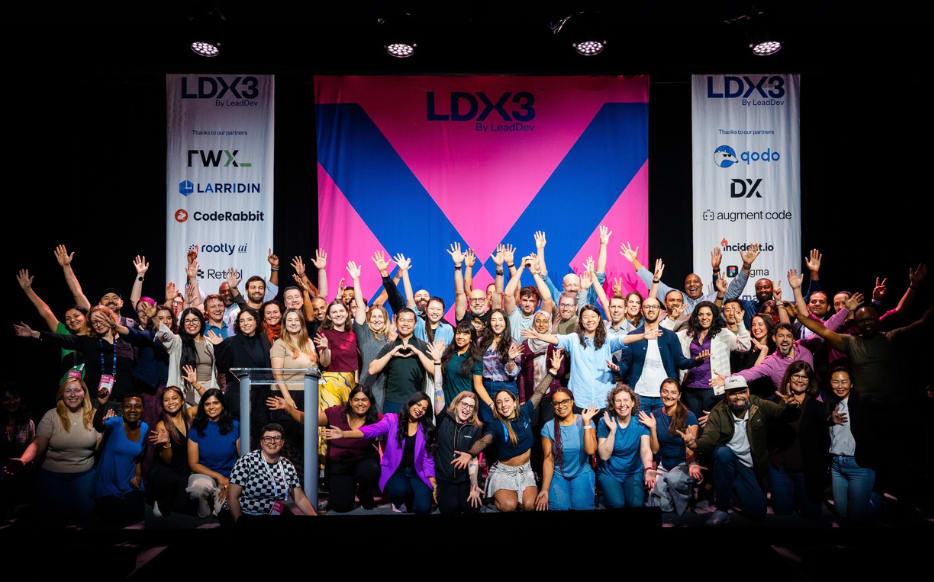
New York • September 8 & 9, 2027
Loved LDX3 New York? Pre-sale tickets for 2027 are now available.
Organisations conflate three definitions of “good” engineering management: what’s rewarded, what works, and what’s ‘right’. Telling them apart builds careers resilient across business cycles, and explains why the AI shift feels so disorienting.
“Good management” has always been a debate in the technical community, but the rise of AI-driven redundancies has put a spotlight on middle management and non-technical leadership. When Big Tech makes dramatic shifts, other organisations are tempted to follow suit, sometimes without considering their individual context.
AI is forcing a step-change across technical ways of working with cultural implications. Leaders need to reconsider what “good management” means, or risk the definition happening to them; changing workflows, team structures, and fundamental expectations about technical leadership. However, this isn’t the first time… what counts as good management shifts with business cycles, not because of moral evolution, but because business needs change.
In the early 2000s, good managers navigated organisational politics and left engineers alone. In the 2010s when money was cheap, good managers stopped coding to focus on attracting and retaining talent. In the 2020s, as cheap capital dried up, good managers are expected to be hands-on again as organisations flatten for efficiency. Now some suggest software engineering itself may become more like ‘agent management’, looking less like traditional development and more like coordination.
Each era ended up creating a philosophy that explained why these approaches mattered. The 2010s framed delegation as “empowering engineers is fundamentally good,” not “capital is cheap, hire aggressively.” The 2020s frame technical depth as “bureaucratic management has made us stale,” not “funding ended, cut costs.” These narratives can become leadership identities rather than operating models, making it harder to see what’s actually driving change.
The confusion comes from conflating three types of “good”:
- Performative good – what gets rewarded right now, or by your company.
- Contextual good – what works given current reality, often specific to your org.
- Moral good – what *you* believe is right, often internalised narratives from your formative era.
The AI shift compounds this challenge. While business cycles are cyclical, technological complexity only accumulates – Cloud, distributed systems, AI – each raised the baseline for what understanding systems means.
This talk provides frameworks for distinguishing what’s actually happening from the stories we tell ourselves, identifying which skills are foundational versus era-specific, and building careers resilient across inevitable future shifts.
Key takeaways
- The three-goods framework (what’s rewarded, what works, what’s right) reveals where your context and your values are out of sync.
- Your management instincts are calibrated to the era you trained in, not necessarily the one you’re operating in now.
- Distinguishing era-laundered habit from genuine conviction requires naming the conditions under which you formed each belief.
- Conflicts about “”good management”” often reflect era mismatches, not skill gaps; your peer may simply be right about a different context.
- How to identify which skills compound across eras, so you invest your development time where it survives context change.