You have 1 article left to read this month before you need to register a free LeadDev.com account.
Estimated reading time: 10 minutes
Key takeaways:
- Junior engineers were never reliably mentored in the office. Luck was doing the work.
- Manager involvement, not location, drives onboarding success, yet most companies still skip it.
- Remote work forces real design instead of relying on chance encounters.
In late June, the London-based fintech firm Revolut announced plans to reverse its remote-first workplace policy for 2027 interns and fresh graduates, mandating at least three in-office workdays for only new, junior hires.
The rationale behind the decision is that “the early stages of a career benefit from in-person collaboration and mentoring,” a Revolut spokesperson told LeadDev in a statement. (The spokesperson did not address LeadDev’s question about who would be providing said mentorship, given that senior staff will not also be in the office.)
The policy points to broader challenges remote leaders face in training and managing junior hires as part of an asynchronous, distributed workforce.
However, personnel and leadership experts say the core problem is likely misunderstood. The underlying friction may not be a question of remote vs. in-person, but about whether organizations are designing onboarding plans that work for both.
More like this
“This was never a system”
Revolut’s policy seems to imply that, in previous eras where in-office work was the default, it was easier for companies to get junior hires up-to-speed. Some challenge this premise.
“The office was never reliably teaching junior staff,” says Alison Geskin, whose company The Art of Strategy helps executive teams overhaul their operations and onboarding strategies.
Geskin agrees that remote junior staff do stand to lose out on what she calls “ambient learning,” such as hearing how a senior handles a difficult client or getting pulled into the room where decisions are being made. Being outside of a shared physical workspace limits junior hires’ opportunities to absorb judgment by osmosis and build key relationships with more experienced colleagues.
However, Geskin points out that sharing a workspace doesn’t guarantee those opportunities, either.
“The catch is that this was never a system,” Geskin says. By relying on the possibility of in-person knowledge transfer instead of designing processes to facilitate it, many organizations allowed luck and happenstance to determine which junior staff got ahead. Ultimately, Geskin says, the entry-level workers who benefitted from this arrangement were often those who “happened to sit near the right person.”
Jackie Shaw, head of people at OneSkin, echoes this point. One of her “biggest takeaways” from overseeing remote onboarding processes, as compared with being in an office, is that “proximity doesn’t automatically create mentorship,” Shaw says. “If junior employees are in the office without experienced leaders around them, companies may not achieve the outcomes they’re hoping for.”
However, it isn’t enough to simply have experienced leaders ‘around.’ They need to be an active part of the onboarding process.
Is effective onboarding just… good management?
Recent SHRM guidance cites research from Harvard Business Review showing that new employees whose managers are actively involved in onboarding are 3.5 times more likely to be satisfied with the process and 1.5 times more likely to feel they’re making a meaningful contribution.
The guidance outlines protocols such as scheduling weekly manager check-ins, giving regular feedback, and providing clearly-defined job expectations – in short, an onboarding agenda that reads much like managerial best practices, carried out over an extended period of time.
Workforce polling indicates that many employers are falling short. In a recent Cezanne HR onboarding survey of 1,000 workers at mid- to large-sized companies across the UK and Ireland, only half said they felt they had the right amount of manager check-ins during their first months on the job. The sentiment was especially pronounced among remote workers: 18% reported having few or no check-ins, which left them feeling less confident and less productive in their jobs.
“Remote-first onboarding shouldn’t be a one-day event,” says Lisa Sansom, an organizational consultant who has created onboarding programs and coached leaders on how to grow and mentor their new employees. “It’s something that is designed and takes place over weeks and months.”
Many organizations miss the mark. Sansom recounts, on one occasion, meeting junior engineers who did not receive any onboarding or orientation beyond their first day. On another, she encountered remote employees who sat at home, in their living rooms, waiting for their email access to be turned on.
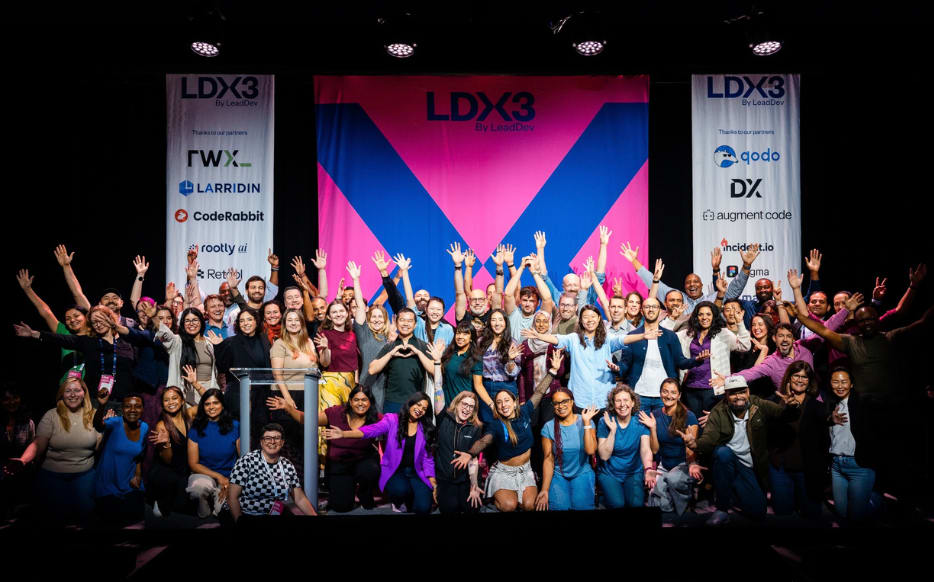
New York • September 8 & 9, 2027
Loved LDX3 New York? Pre-sale tickets for 2027 are now available.
These examples reinforce the importance of hiring organizations’ preparedness and planning to ensure that new hires have the tools and resources in place to succeed in their roles.
“What are the things that a new employee needs on the first day, such as email access, shared drive access, security profiles? Those need to be ready immediately,” Sansom says. “Then, what else do they need to know and who should they meet with? What are their job requirements and what resources must they access? How will they get oriented to the team and any other partners that they need to know? What are the success criteria?” Onboarding programs can and should be designed to account for these considerations.
How companies can actually support junior engineers, wherever they work
Though widely under-utilized, mentorship is a potentially useful piece of the puzzle. A 2025 Gallup survey found that only 28% of employees had participated in career mentorship programs during the previous year. Yet, those that had participated reported significantly higher job satisfaction than those who had not.
Anna Maria Radu, founder and fractional COO of the Romanian business operations and marketing studio DigiTales, says that mentorship is “the one thing I’ve personally noticed that made a difference” in bolstering onboarding outcomes for junior hires.
Assigning a more senior mentor to provide juniors one-on-one guidance in working toward specific, concrete goals not only helped fledgling employees hone their technical problem-solving, but it showed them how to navigate their daily workflows and ask for help when necessary. “It helped build self-confidence,” Radu says.
Today’s remote workplaces may be in the ideal position to consciously replicate what works. “Remote takes away the option to leave development to chance, which forces you to design it,” says Geskin. “A designed system reaches everyone consistently, not only the well-seated and well-liked.”
Geskin acknowledges that a remote work environment cannot replicate the spontaneous relationship-building moments that unfold in a shared physical workspace. However, she argues, that loss is smaller than it may seem – “and a good portion of it can be engineered back in on purpose.”