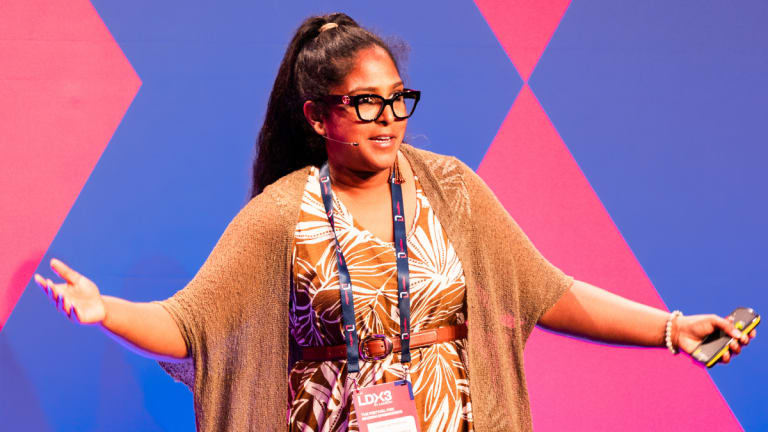
Register or log in to access this video
A practical playbook for empowering individuals and delivering complex technical products across distributed teams without sacrificing inclusion or autonomy.
New York • September 8 & 9, 2027
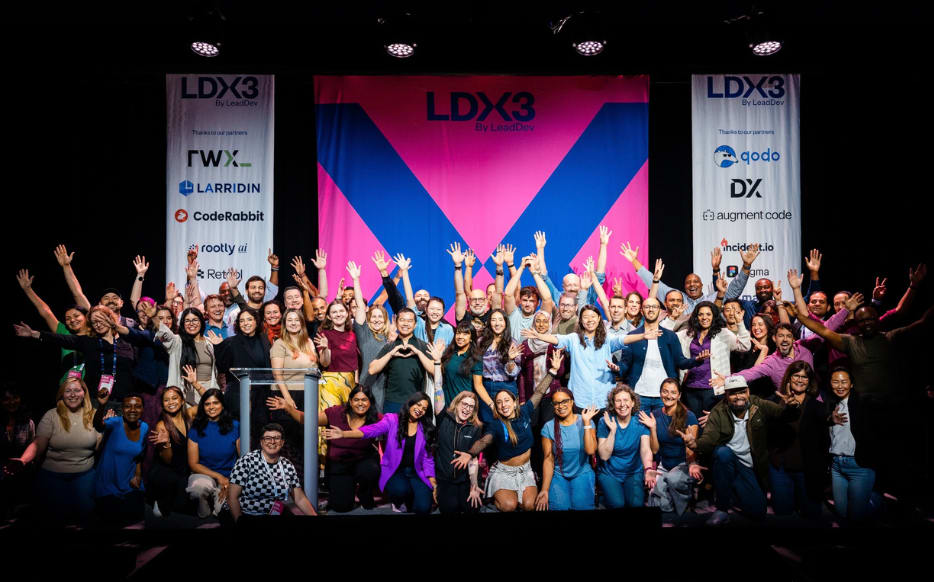
Loved LDX3 New York? Pre-sale tickets for 2027 are now available.
In a world where teams are more distributed than ever, managers and senior ICs need to evolve their collaboration styles and step into the future of work. Gone are the days of huddling 10 people in a room with a whiteboard, dry erase markers, sticky notes and way too much coffee in the hope that somehow intellectual osmosis happens and we’re miraculously all aligned. That approach does kinda get the job done, let’s be honest here, but while we’re at the honesty bit, let’s also concede that eating a hamburger with a spoon also gets the job done with the same degree of efficiency.
Old-school collab can also lend itself heavily to the “get in that room and don’t come out til you’re done” vibe that not only strips autonomy and trust away from our most highly respected engineers but also creates ridiculously expensive meetings (hello, 6 staff engineers and 2 principals in one room). Don’t get me started on the impact this has on inclusion (and yes, I still care deeply about this, and you should too).
In my experience, some of the best technical decisions have been a byproduct of allowing folk to simmer over what was being discussed — to think asynchronously, sketch ideas in their own time, pressure-test assumptions, and come back sharper. The quieter, more pensive folk who aren’t the loudest in meetings tend to stare deeply into the Miro/Notion abyss… sometimes with a little help from modern tools that help them organise thoughts or explore alternatives — and then → lightbulb!
Inclusion isn’t giving someone your paint and letting them paint their own canvas. It’s allowing people to add colour to your monochromatic genius and, fam, this method we’ve been using to fuel some of our biggest projects in Pleo has resulted in some pretty spectacular technicolor masterpieces!
If you’ll have me, I have some A-M-A-Z-I-N-G tips and tricks to share about how to successfully build and launch technically complex features requiring cross-domain/cross-team collaboration with engineers, PMs and domain leads distributed all over this beautiful blue speck of ours (aka the Earth), while empowering our teams to be the best versions of themselves yet.
The next evolution of collaboration is human-led, AI-assisted, and designed to amplify thinking and level the playing field — so no one feels like they don’t belong.
Key takeaways
- A clear picture of what effective collaboration looks like in 2026 and beyond – moving past synchronous, room-centric rituals toward more inclusive, distributed ways of working.
- Why empowering engineers and cross-functional partners isn’t a “nice to have,” but a practical lever for higher engagement, better technical decisions, and faster, more sustainable delivery.
- Concrete patterns for enabling asynchronous thinking that give quieter voices space to contribute and improve the quality of outcomes.
- Real-world examples from complex, cross-domain initiatives showing what worked, what didn’t, and what we’d do differently next time.
- Actionable techniques attendees can apply immediately in their next project – from shaping collaboration norms to structuring work so teams can do their best thinking.