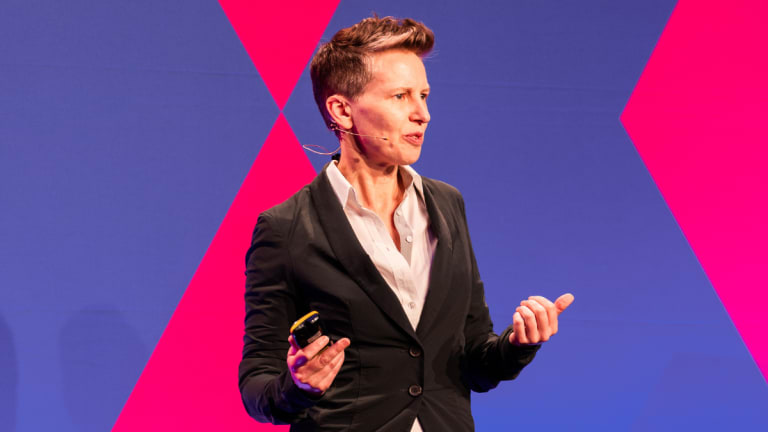
Register or log in to access this video
A knee injury turned me from player to coach. Watching from the sidelines taught me that understanding how people work matters more than technical skills alone.
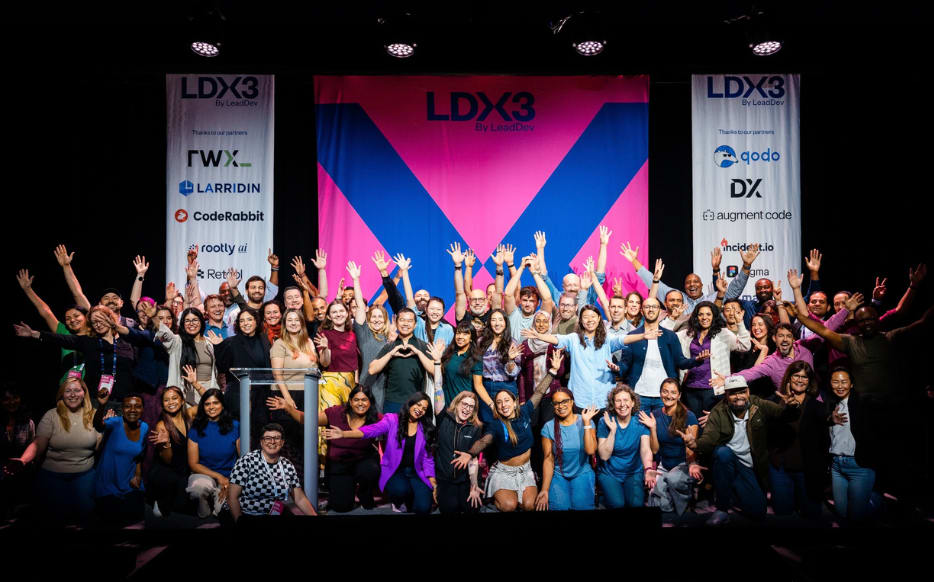
New York • September 8 & 9, 2027
Loved LDX3 New York? Pre-sale tickets for 2027 are now available.
Two years ago, a serious knee injury stopped me from playing sports. Instead of losing contact with my over-30s women’s football team whilst I recovered, I volunteered to coach from the sidelines—something I’d never done before. Suddenly, I was watching the same game from a completely different angle.
On the pitch, I’d naturally lead by example and being a good team player. From the sidelines, I started seeing the whole picture and all the people interacting with each other: Who goes quiet when they make a mistake versus who gets visibly frustrated? Who needs a confidence boost before they’ll attempt something challenging? Who plays better with direct instructions versus space to be creative? Who says they are fine but actually are struggling inside?
In my work life I’d focused on balancing teams with skills, experience and temperaments but hadn’t consciously considered the psychology of teams. When I started to do this with my sport team the parallels to motivating engineering teams hit me immediately.
Sports coaches often say “”the game is 80% mental and 20% physical.”” If you relate this to software engineering, we are saying that performance of a team is 20% technical skills and 80% mental skills. Yet in attempting to improve teams we are regularly focusing on the technical skills and process improvements.
This talk is about learning to “”read the game””—to observe your team as a whole and the individual parts at the same time, and the importance of them understanding about each other.
The best teams aren’t just technically capable—they understand each other.
Key takeaways
- Learn why observing behavioural patterns in your team members is important
- Understand why creating psychological safety for people to say “I’m having a tough time today” makes teams stronger, not weaker
- Discover practical techniques for helping team members understand each other’s stress signals, motivations, and working styles
- Learn why a plan should be aligned to the strengths and weaknesses of the team