Register or log in to access this video
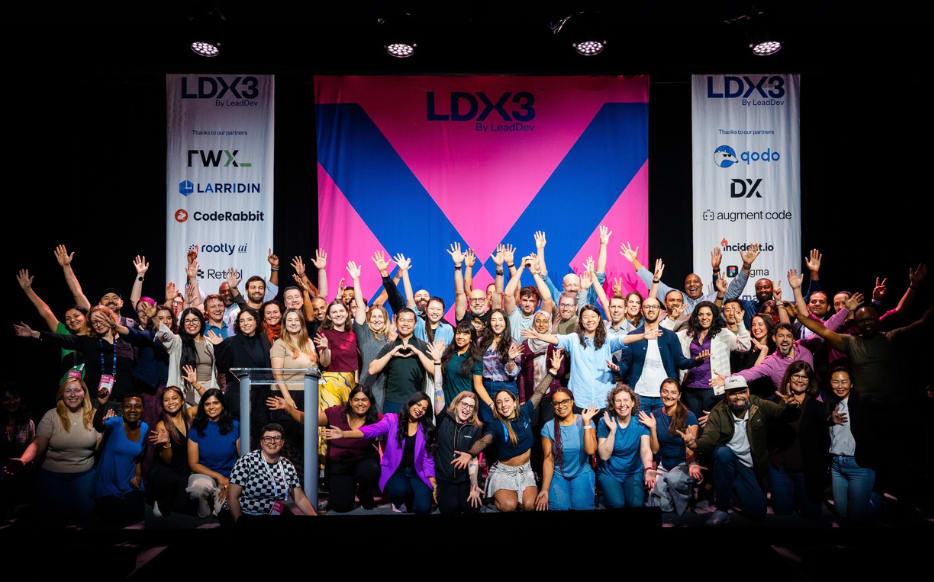
New York • September 8 & 9, 2027
Loved LDX3 New York? Pre-sale tickets for 2027 are now available.
We build systems to scale, evolve, and survive failures – but rarely to tell us when they are ready to die. This talk explores why “letting go” should become a strategic engineering capability.
Modern engineering organizations are incredibly good at creating software. We can spin up services in hours, generate code with AI, and track growth through sophisticated KPIs. But most organizations still have no mature way to answer a much harder question:
“How do we know when something should stop existing?”
For years, the software industry optimized for growth. Today, many organizations face a different reality: shifting markets, flatter structures, shrinking capacity, and increasing operational pressure. Meanwhile, AI is lowering the cost of generating code faster than we can sustainably maintain it.
The result is an uncomfortable asymmetry: we create software faster than we can build the capacity to understand, operate, simplify, and retire it.
At XING, this tension became impossible to ignore as we tried to sustain a legacy ecosystem while simultaneously reducing complexity across the organization. We uncovered a cultural blind spot: we nurture systems to scale, evolve, and survive failures — but rarely to tell us when they are ready to die.
Systems quietly become immortal. Operational burden becomes invisible.
AI didn’t create this problem, but it made the gap impossible to ignore. As software creation accelerates, we are suddenly forced to ask questions our systems were never designed to answer:
How sustainable is this long term? What is the real cost of keeping it alive? How do we know when complexity outweighs value?
These shouldn’t be reactive questions asked only during organizational pressure. They are questions we should design our systems and organizations to answer from day one.
In this talk, I’ll share the technical, operational, and emotional realities of treating “letting go” as a core engineering capability: what worked, what failed, and how we started shifting our culture to see simplification, retirement, and reduction as necessary parts of sustainable engineering.
This is not a talk about deleting software. It’s about creating systems that can tell us when they are no longer worth carrying.
Takeaways:
- The uncomfortable realization that your organization may already be carrying more software than it can sustainably understand, operate, or retire
- Practical signals that systems, services, or platforms are becoming “immortal”
- Ways to make simplification, retirement, and lifecycle thinking part of sustainable engineering culture
- The psychology of “less”: how to counter emotional attachment to systems, reframe retirement as capacity creation, and reward simplification instead of accumulation