
You have 1 article left to read this month before you need to register a free LeadDev.com account.
Estimated reading time: 4 minutes
It’s a terrible time to find (and keep) a job for most software engineers.
At least, this has been the resounding message of 2025. But there may be more to the story than meets the eye.
A Bloomberry analysis of global jobs data from January 2023 to October 2025 found that despite the widespread sense of doom, the overall number of software engineering jobs has held mostly steady since 2024. “Software engineering is still one of the most secure jobs you can have today, relative to most other white-collar jobs,” writes Bloomberry CTO Henley Wing Chiu in a summary of the findings.
Wing Chiu’s takeaway seems to be at odds with engineers’ current job-market reality. The ongoing ‘tech recession’ has now seen four years of layoffs and hiring slowdowns, with the rise of generative AI throwing new unknowns into the industry’s seemingly endless contraction. Prospects are especially grim for entry-level engineers, some of whom are vying against more experienced professionals for the very same roles.
The apparent contradiction in Bloomberry’s findings points toward an emerging paradox. The tech industry is both shrinking and expanding at once, with software engineers caught in the middle. On both counts, 2026 will likely bring more of the same.
Your inbox, upgraded.
Receive weekly engineering insights to level up your leadership approach.
Slower hiring, pockets of skill-based demand
In a labor market with fewer overall jobs and sluggish overall hiring, tech firms are clamoring for AI talent. What this means, in practice, is that tech’s net employment outlooks appear favorable, even as prospects for most workers and jobseekers remain grim.
Indeed’s 2025 Tech Talent report shows that, as of July 2025, US tech job postings were down 36% as compared to early 2020 levels. During that same time frame, the Netherlands, UK, and France showed even sharper declines in their respective numbers of tech job postings on Indeed, with most of Europe faring only slightly better. The Institute of Student Employers further reports that the UK tech sector has cut 46% of new graduate jobs in the past year alone.
At the same time, software and applications developers were named the world’s third-largest growing job category between 2025 and 2030 by the World Economic Forum in its 2025 Future of Jobs report. Around half of tech employers in Belgium, India, Canada, and the US said that they expected a net increase in headcount before the end of this year, alone, according to the Experis Tech Talent Outlook report for Q4 2025.
“The story isn’t that jobs are vanishing, it’s that the bar for skills is rising,” states Kye Mitchell, President of Experis US, in a Manpower Group press release accompanying the Experis report. The memo highlights AI implementation, cloud migration, and cybersecurity as areas where employers “are prioritizing long-term transformation,” and looking for talent.
More like this
Looking ahead to 2026
Recruiters, founders, and hiring managers echo the prevailing skills-first sentiment in their 2026 hiring predictions.
“I think that skill-based hiring is definitely a way to go in 2026, and this applies to any seniority level,” says Nathan Putsey, the Manchester-based talent acquisition manager at JobLeads. “AI-related skills are becoming an absolute must, and with a significant lack of new junior positions appearing, people at the start of their career will be evaluated for the skills they bring.”
The rising use of AI for tasks once relegated to junior developers will likely also inform hiring decisions. “AI-generated code can add a disproportionate amount of complexity,” says Richard Demeny, London-based founder and CEO of the AI-powered B2C startup Canary Wharfian. “Maintaining this, when an unexpected bug surfaces, will probably be five times more difficult.”
In the year ahead, engineering jobseekers will need to go the extra mile to demonstrate what they can do.
The tech industry’s evolving skill requirements (and swelling pool of eager candidates) are already changing the way employers review prospective hires, with application cover letters becoming an outdated flourish. “At this point, the only true candidate filters are portfolio work, GitHub repositories and contributions, or take-home technical assessments,” says Lacey Kaelani, the CEO and co-founder of the New York City job-search startup Metaintro.
Standard academic credentials are similarly diminishing in value. In the 2025 State of Tech Talent report from General Assembly, 18% of global HR professionals reported being more likely to look first at non-degree education and certifications when hiring for remote software engineering, data analytics, data science, and UX design roles, compared with 6% in 2023.
Employers are also placing more of a premium on people skills. An overwhelming 95% of HR professionals say it’s harder now than it was three years ago to source candidates with both the technical and soft skills needed to succeed, per General Assembly’s report.
This assessment seems to align with Bloomberry’s observation of increasing job “bifurcation” across white-collar industries, including tech. Demand appears to be holding steady for leadership roles that value strategic and complex skill sets, and diminishing for positions focused on straightforward execution. “Even within tech, backend complexity is valued while frontend work becomes a tad more commoditized,” Wing Chiu writes.
However, LeadDev’s sources resist the simple dichotomies of frontend versus backend or leaders versus ICs.
Putsey notes that, while the growing need for sophisticated problem-solving will inevitably “push more senior and strategic roles into higher demand,” adaptability and know-how are critical across the organizational hierarchy. Demeny adds that frontend apps can grow just as complex as backend apps, and that “it’s just as easy to shoot yourself in the foot with agentic coding tools” in both dev streams.
On the whole, Demeny sees tech employers’ emerging needs and challenges as emblematic of much bigger shifts in the tides. Engineering career paths aren’t splintering into higher- and lower-demand tiers; they’re becoming rarified altogether.
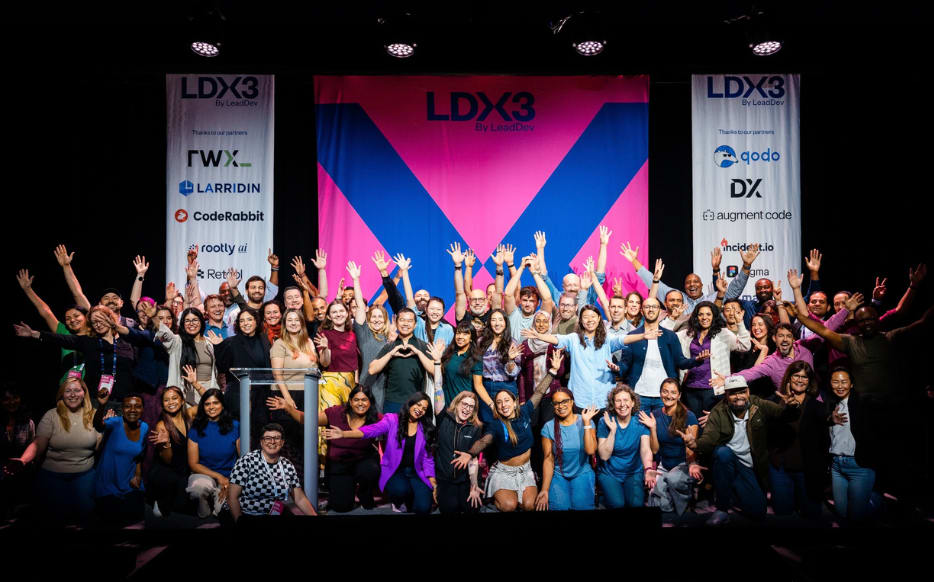
New York • September 8 & 9, 2027
Loved LDX3 New York? Pre-sale tickets for 2027 are now available.
“I think we are seeing the consolidation of the software-development industry and I think it will become a more elite profession, similar to law or medicine, where there are relatively few, highly skilled professionals who actually have a job,” he says.