Register or log in to access this video
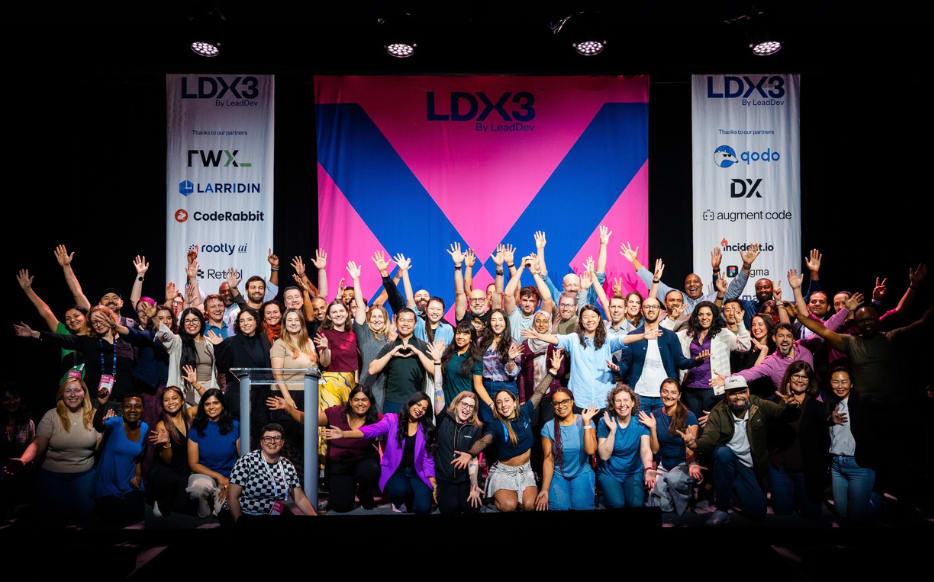
New York • September 8 & 9, 2027
Loved LDX3 New York? Pre-sale tickets for 2027 are now available.
How we scaled review quality across 200+ engineers with AI instead of more reviewers — the build-vs-buy call, company-specific rules, the cost story, and the adoption fight.
Code review doesn’t scale linearly with headcount. At 200+ engineers it becomes the single biggest delivery bottleneck — senior engineers burning a third of their time on the same repeated comments, and a handful of domain experts becoming gatekeepers for whole feature areas. This is the case study of how we scaled review quality with AI instead of more reviewers.
It’s a leadership story as much as a technical one. We start with the build-versus-buy decision: we evaluated four AI review tools, and the honest twist is that our formal evaluation’s winner wasn’t what we shipped — the eval was right about features and wrong about what mattered in production. From there: building a custom integration layer when no off-the-shelf tool fit, encoding our own security and architecture standards into the AI so its feedback earned trust, and running the whole thing at roughly $200/month against $40–80K/year SaaS quotes.
The hardest part wasn’t the technology — it was adoption. I’ll cover how we measured whether the AI’s comments were actually helpful (a simple feedback loop), and the moment we knew it worked: another team adopted the system on their own, with no mandate from leadership. Attendees leave with a practical framework for introducing AI into their review process — what to automate, what to keep human, how to measure it, and how to drive adoption across an organisation that’s seen plenty of tools come and go.
Key takeaways
- A build-versus-buy framework for AI code review — and why the “best” tool on paper may not be the one you ship.
- How to encode your own security and architecture standards into AI review so engineers actually trust it.
- How to run AI code review at scale for ~$200/month instead of $40–80K/year.
- How to measure whether AI feedback is genuinely helpful, with a lightweight feedback loop.
- What organic, un-mandated adoption by another team tells you about a tool’s real value.