
You have 1 article left to read this month before you need to register a free LeadDev.com account.
Estimated reading time: 5 minutes
These days, it seems as if no one is employable.
A new year has dawned, but it remains a terrible time to find and keep a job in tech. As layoffs and hiring stagnation continue apace, a contradictory trend has begun to take hold: Both entry-level workers in their 20s and mid-career professionals over 40 are being edged out of the tech workforce.
Experts say this paradoxical pattern is no coincidence – it’s dual-ended ageism. Jobseekers, in particular, are feeling the squeeze.
The trend raises a question that cuts to the heart of today’s inscrutable engineering job market: Is anyone the ‘right’ age to get hired?
A sudden shift in an ongoing pattern
Gen Z’s tech-hiring woes have dominated recent headlines, in part because of the trend’s departure from prior industry norms. Instead of shutting out younger workers, tech has long favored them, perhaps due to the industry’s panoply of young founders, such as Bill Gates and Mark Zuckerberg, who launched their companies before their 20th birthdays. In 2007, then-22-year-old Zuckerberg said outright that he believed “young people are just smarter.”
In the years that followed Zuckerberg’s quip, older tech workers’ employment prospects worsened – even through the height of the 2010s tech boom. According to a late-2024 report from the US Equal Employment Opportunity Commission (EEOC), the share of US high-tech workers over 40 shrank from 56% to 52% between 2014 and 2022. The same report noted that the high-tech workforce was significantly younger than the US workforce at-large, with 25- to 35-year-olds comprising 41% of tech workers compared to just 33% of workers overall.
Then, a sharp pivot. Workforce data from the compensation management software company Pave found that the percentage of Gen Z employees at large public tech firms fell by more than half between January 2023 and August 2025, from 15% to just under 7%. The dip in entry-level staff was substantial enough to raise the average workforce age of those companies from 34.3 years to 39.4.
Pave’s findings are sharpened by a new Stanford analysis that identifies early-career software developers as particularly vulnerable to current workforce contraction. Using high-frequency administrative data from the management firm ADP, the report shows a 20% drop in employment among software developers ages 22 to 25 between October 2022 and September 2025, while jobs either remained stable or increased among developers in older age categories.
Your inbox, upgraded.
Receive weekly engineering insights to level up your leadership approach.
The startup squeeze
When explaining their decision-making around hiring and layoffs, companies tend to attribute shifting business needs (or, more recently, AI adoption) as the core reasoning. They effectively explain away unequal employment outcomes as the function of mismatched skills in a changing market and not a product of discrimination. But insiders tell LeadDev that unconscious bias – and not-so unconscious bias – are also at play.
“Ageism is pronounced in tech for two different reasons,” says Soozy G. Miller, a New York City-based tech career adviser and recruiter for AI startups. “The younger people are, the more they understand tech and know how to apply it and learn it faster. But the younger people that are great at tech don’t have the gravitas, life experience, or interpersonal experiences to really make life better at the company.”
At the same time, Miller says, age-related stereotyping plagues workers over 40, who are often perceived as inflexible. These preconceptions are inadvertently reinforced by young leaders in the booming AI startup space.
“I’m recruiting for AI startups and they are so picky about their placements because they’re backed by a lot of money and they’re paying a lot of money for very specific talent, expertise, and skills,” Miller says. “My recruiter partner and I will send them perfect people who check all of the marks of what they’re looking for, and we don’t hear back because the very young people that are leading these companies are very specific about what they want.”
More like this
Prabhat Jha, a Bay Area database engineering head for a major tech company, feels similarly about the startup space based on his conversations with industry peers. “They tend to like people who have not too much experience – like five to seven years – who are on top of their game with respect to trying different AI tools, but not too expensive from a compensation perspective, and not too old,” Jha says. He adds that older workers are often perceived to lack the stamina to “move fast and break things” or work long hours. In youth-obsessed Silicon Valley (where so-called biological age tests are a growing craze), these preconceptions are especially prevalent.
Dipak Patel, a post-exit tech entrepreneur in Southern California who spent much of the past year looking for business development and CRO roles, believes that young startup leaders are also biased against mid-career workers with families. “They think, ‘He might not be able to make this meeting because he’s going to be with this kid,’” Patel says. “They’re not looking for old talent. And for them, that’s 35 and older.” At just 38, Patel has opted to put his job hunt on pause and focus on consulting.
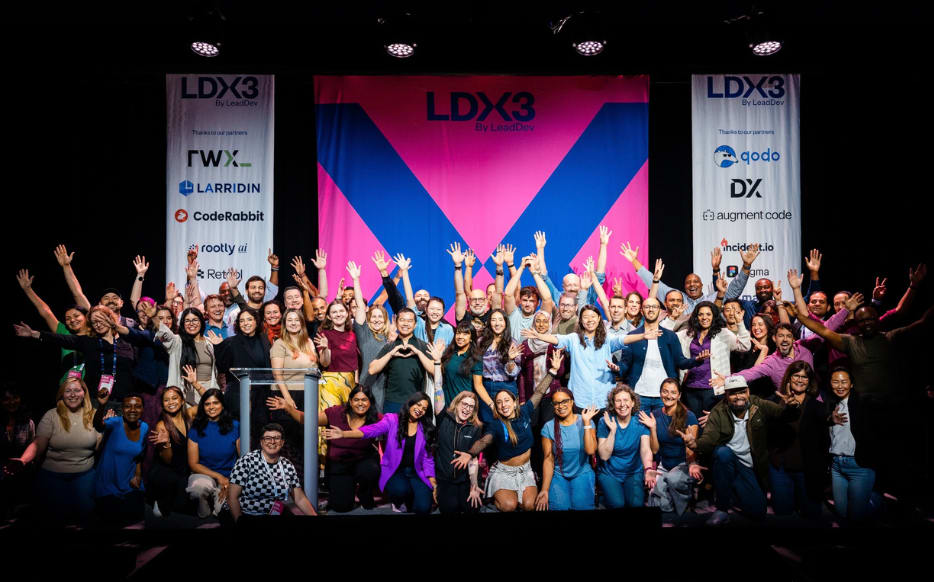
New York • September 8 & 9, 2027
Loved LDX3 New York? Pre-sale tickets for 2027 are now available.
The right mix
In tech and the workforce at-large, ageist hiring practices squander precious skills and knowledge transfer between workers of different experience levels. At the institutional level, such recruitment oversights can lead to existentially costly mistakes. For individuals, they can be career-ending.
Patel believes that young founders should actively seek and listen to experienced advisors rather than viewing them as threats. He points to Europe’s unicorn- and ‘soonicorn’-laden startup landscape as a potential model for the US tech sector, citing the Swedish AI firm Lovable and Germany’s Kaia Health as examples of companies that have achieved rapid growth without Silicon Valley’s ageist constraints.
“With a lot of us more experienced people in tech, we understand the founder’s passion and what we would need to get right, but we’re not delusional about what it’s going to take to get to that touchdown,” says Patel. “We have that experience to have setbacks, fix things, and move forward.”
For engineering leaders in charge of hiring, Jha recommends stacking teams with a “good mix” of experienced people and recent graduates, and not optimizing for any one demographic. He thinks companies should judge candidates on actual merit and performance, not assumptions about age-related flexibility or tech-savviness. In the end, hiring should target “smart people who know what they’re doing” and those who show the capacity and willingness to learn.


