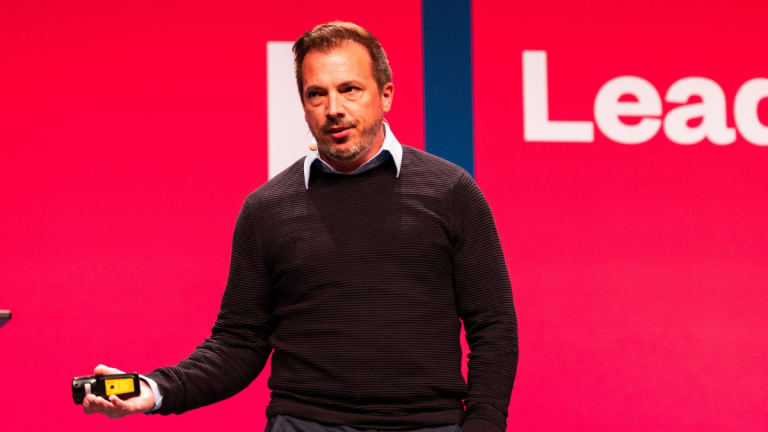
Register or log in to access this video
New York • September 8 & 9, 2027
Loved LDX3 New York? Pre-sale tickets for 2027 are now available.
A field report from 100 million code reviews on what it takes to ship at agentic speed. CodeRabbit cleared four bottlenecks and now ships 10x more software without adding engineering headcount. David Loker shows how.
What does it take to move from human-centered software development to fully agentic development, so you can ship dramatically faster without sacrificing quality or security?
At CodeRabbit, we have run 100 million code reviews, so we see where teams get stuck. The teams we work with are solving agentic coding, but not yet agentic shipping. Now that code is cheap to write, four things have become bottlenecks: review, understanding, prioritization, and security.
We hit all four. We cleared them, and that is how we now ship 10x more software without adding engineering headcount.
David Loker, VP of Applied AI at CodeRabbit, shows how. He walks through the four practices that helped us, one for each bottleneck: an adversarial review loop, explainability, a prioritization system, and constant security on new and existing code. He explains how our workflows, roles, and responsibilities changed, and why shipping at agentic speed comes down to trust, built on purpose. You will leave with a plan for where to start and how to measure progress.
Key takeaways
- Find the bottleneck holding your team back today: review, understanding, prioritization, or security. Judge your coding agents by how much of their work you can trust, not by how much they can do on their own.
- Build one practice for each bottleneck: an adversarial review loop, explainability, a prioritization system, and constant security on new and existing code.
- Change how work flows and who does what. Let most changes merge after an independent check, send the changes with the most value and risk to a person, and make designing that system a leader’s job. Measure progress by how often merged changes get rolled back.
Promoted Partner Content