You have 1 article left to read this month before you need to register a free LeadDev.com account.
Estimated reading time: 10 minutes
Key takeaways:
- AI takes the blame out of the war room: evidence-based findings are harder to dispute than a tired engineer’s assertion at 3 am.
- Earn autonomy incrementally. Start read-only and only grant write access once the system has proven its accuracy across real incidents.
- No reasoning trail, no deployment!
At 3 am, when a production incident is cascading and everyone is on the call, the easiest thing to do is blame the network team. The hardest thing to do is prove it wasn’t them.
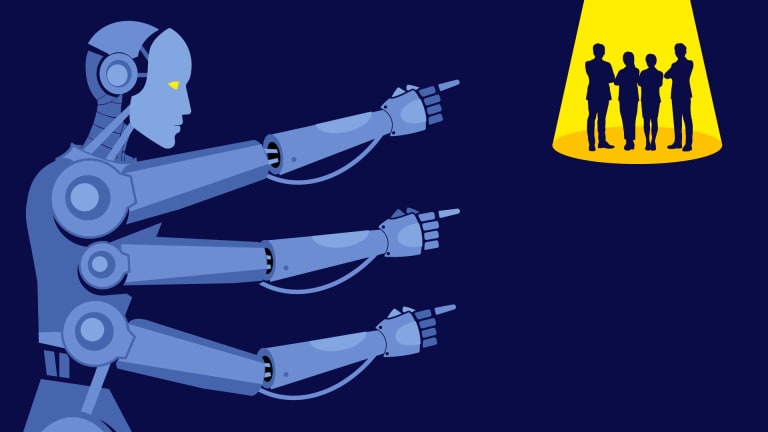
AI diagnostic agents are changing that dynamic: they can now investigate cross-domain incidents autonomously, pull evidence from across your infrastructure, and surface findings that implicate specific teams – whether those teams like it or not.
The last time I sat in a 3 am war room, the root cause was obvious within 20 minutes. The cascading effects of a database configuration change led to application timeouts, triggering network-related alerting and prompting the network team to become involved, despite their lack of involvement in the root cause.
However, we did not reach that conclusion for another three hours. The team with the most senior person on the bridge call had successfully deflected attention toward the network team’s infrastructure. Not because the evidence supported it, but because nobody wanted to challenge a director at 3 am.
That dynamic is changing. AI agents are moving from coding assistants into operational territory, diagnosing production incidents autonomously, pulling data from across your infrastructure, and producing findings that implicate specific teams as the source of a failure.
These are not chatbots that answer questions about your logs. They are investigative systems that reason across network, application, database, and infrastructure domains. The same domains that different teams in your organization own and defend.
If you lead an engineering organization, this presents an opportunity and a minefield. The opportunity is obvious: reduced war room fatigue, faster incident resolution, and the capability to conduct diagnostic tasks without relying on whoever is on call.
The minefield is less discussed but is far more likely to sink the project. It involves credentials, blast radius, organizational politics, and a question that most AI architecture documents skip entirely: what happens when the system’s findings implicate a specific team?
I have spent the past two years building and deploying multi-agent diagnostic systems for cross-domain root cause analysis at a large enterprise technology company. Here is what I wish someone had told me before we started.
Your inbox, upgraded.
Receive weekly engineering insights to level up your leadership approach.
3 questions that gate every deployment
Before any operations team allows an autonomous agent to enter its production environment, it needs answers to three concrete questions. The issues that each of these questions address come up in every deployment discussion, and getting them wrong is how many promising AI projects die in the pilot stage.
What can this system see?
A diagnostic agent investigating a cross-domain incident must query various sources, including network device configuration files, application log files, database metrics, and the state of a Kubernetes cluster. Each source type has its own access control model. Credential access control models for autonomous systems should be drastically different from those for human users.
Autonomous agents should receive investigation-scoped credentials, meaning they are granted for a specific diagnostic context and revoked after the investigation completes.
While this is certainly a security question, it is also an identity architecture question. If there is too much irrelevant context, the agent’s performance will degrade, just as it would confuse a human engineer who received the wrong background information. Scoping data access improves both security and accuracy.
What can this system do?
Start read-only. Every successful deployment I have ever seen started with an agent that could investigate and report, but did not take corrective actions. Once the agent has demonstrated the accuracy of its diagnoses through dozens or hundreds of investigations, only then will anyone consider granting it write access.
As the pressure to close the loop grows (and it will), every automated action taken by the system must include a defined scope of impact, a defined rollback mechanism, and context-sensitive approval gates.
For example, restarting a non-critical service at 3 am during low traffic may be a safe action to automate. However, modifying firewall rules on a production network should always require human approval regardless of confidence levels. That distinction should be configurable by the operations team, not hard-coded by the development team.
When does it know to stop?
The most under-designed requirement of all is recognizing that not all investigations will result in a definitive root cause. The evidence may contradict itself, the confidence scores may be very low, or the investigation may reach a domain boundary where the system lacks sufficient data to continue.
The correct response is transparent escalation: document what has been found, describe what is still unknown, and provide the complete reasoning trail to the human who will continue the investigation where the system stopped. The system should never force the human to start over again. A system that attempts to make assumptions when it is uncertain will lose the trust of your operations team exactly once.
More like this
The reasoning trail is the product
What makes this handoff productive is the reasoning trail: a structured record of every hypothesis the system generated, every piece of evidence it reviewed, every path it analyzed and ultimately abandoned, and all the causal dependencies it identified. This is developed as a directed graph that expands with each iteration of the investigation.
When the system cannot solve a problem on its own, the human engineer who receives that partially completed investigation does not start from scratch. Instead, they begin from a curated body of work that may represent an hour of human investigation time.
Consider the reasoning trail as an observability layer for the AI agent itself. Just as you utilize distributed tracing to understand what your microservices did and why, the reasoning trail allows you to “debug the debugger.” It displays the hypotheses the system investigated, where the system shifted course, and the evidence supporting each decision. Without it, you are introducing an opaque system into your most critical operational environment.
The reasoning trail is also the mechanism that enables trust to be quantifiable. When your team is deciding how far to extend the systems’ access rights or to grant limited remedial authority, they can examine previous investigations and audit the rationale behind each.
- Did the system investigate productive avenues of inquiry?
- Did the system identify non-productive avenues (i.e. dead ends)?
- Did the system properly determine cross-domain dependencies?
The reasoning trail changes trust from being a gut feeling into an auditable record.
For engineering leaders, this has a practical implication: if the diagnostic system you are evaluating does not provide an explainable reasoning trail, do not deploy it. A system that provides you with a root cause label but does not demonstrate its logic is a black box. Operations teams will not trust a black box when their production environment is at stake, and they should not.
The trust boundary nobody talks about
There is one trust boundary that rarely appears in technical architecture documents but matters enormously in practice: organizational politics. Cross-domain diagnostics implies an AI system is operating across team boundaries. A single investigation might query the network team’s setup or infrastructure, the database team’s configuration, and the application team’s deployment. The findings might implicate one team’s domain as the root cause of the issue.
Human war rooms manage this through social norms, seniority, and diplomatic phrasing. An autonomous system cannot use these methods to manage this process. Its findings need to be factual, evidence-based, and presented without blame. The reasoning trail helps here because it shows the chain of evidence transparently. The system is not pointing fingers. The system is simply showing the data; it is up to the humans involved to decide who or what is accountable.
In reality, automated investigations offer a clear advantage. Evidence-based reasoning trails are much harder to dispute than a tired engineer’s assertion made at 3 am. When data clearly shows that a configuration change in one team’s domain caused cascading failures in another team’s domain, there is less room for the political deflection that often occurs during human-driven incident responses.
The investigation relies on the quality of the evidence, rather than on who in the room has the most organizational authority.
However, there is a leadership challenge: you need organizational buy-in from every team whose domain the system will investigate before implementing the autonomous diagnostic system. If the network team discovers that an AI system has been querying their infrastructure and building cases about their configurations without their consent, it creates a political problem that no amount of technical accuracy can resolve. Therefore, it is recommended to treat the rollout as an organizational change initiative rather than simply a technical deployment.

New York • September 8 & 9, 2027
Loved LDX3 New York? Pre-sale tickets for 2027 are now available.
A progressive trust model
The trust boundaries described above are not static. They expand as the system proves itself. Based on what I have seen work, here is the progression:
Phase 1: shadow mode
The system runs parallel to human investigators, producing an independent investigation. However, the system does not surface any results to anyone other than the evaluation team. This phase is used to test the system’s accuracy without introducing operational risk. Run the system in shadow mode for at least 30 days on real incidents.
Phase 2: read-only, human-in-the-loop
The system produces investigations that are visible to the operations team, but it provides no automated remediation. Instead, engineers use the reasoning trail to accelerate their own troubleshooting efforts. This phase establishes the broadest organizational trust because every team can see what the system is doing and validate it against their domain expertise.
Phase 3: limited automated response
Once the system has proven itself accurate across a large number of problem scenarios, allow it to automatically remediate problems within defined problem classes with a controlled blast radius. For example, restarting a non-critical service, scaling a resource, or opening a ticket with the relevant team. Each remedial action type requires explicit opt-in from the team that owns the affected system.
Most of the organizations I have worked with fall into Phases 1 and 2. Moving from Phase 2 to Phase 3 generally involves the toughest leadership decisions because that is where you grant the system authority to change the production state. Do not rush it. The cost of moving too fast is not a technical failure. It is a trust failure that sets the entire initiative back several months.
The AI leadership decision
The systems that will succeed in production are not necessarily those with the most sophisticated reasoning engines. Instead, they build trust incrementally, operate transparently, and know when to seek assistance.
As an engineering leader, your role is not to determine whether multi-agent diagnostics can solve technical problems (they can), but to establish the trust model, secure organizational buy-in, and set the pace for progressive deployment. By doing so, as the system gains more autonomy, every team in your organization will understand what it can see, what it can do, and when it will stop and call a human.
If you are currently evaluating a diagnostic AI system, you should start by asking three critical questions. These questions are:
- Does the system provide an explainable reasoning trail?
- Are there ways to scope the system’s credentials to individual investigations?
- What does the system do when it reaches a domain boundary that it cannot cross?
If the vendor cannot answer the third question with confidence that the escalation will be transparent, it would be wise to continue your search.
If you are not yet evaluating these systems, try this at your next incident retrospective: ask whether an evidence-based investigation would have produced a different conclusion than the one your team arrived at. If the honest answer is yes, it tells you where the primary diagnostic bottleneck is. The primary bottleneck is not in your tooling. It is in the room.
Knowing when to stop is what separates a demo from a deployment. It is also, not coincidentally, what separates good engineering leadership from good engineering.