You have 1 article left to read this month before you need to register a free LeadDev.com account.
Estimated reading time: 5 minutes
Key takeaways:
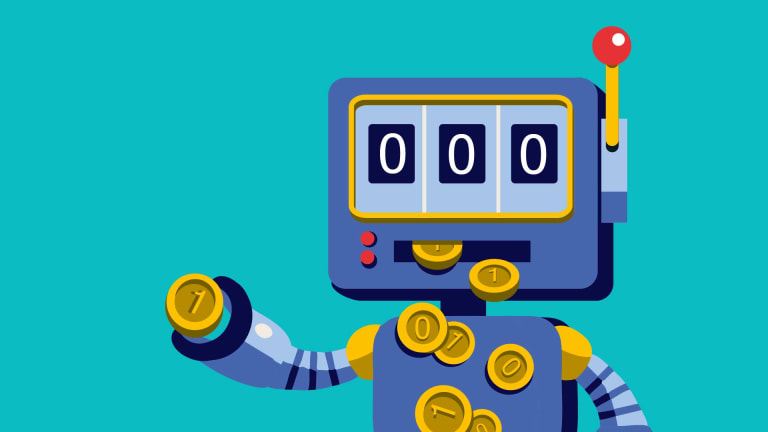
- AI agents create a “slot machine” effect, using micro-rewards and reduced friction to keep developers prompting late into the night.
- While AI can increase output, it can also lead to longer workdays, sleep deprivation, and burnout.
Coding with AI agents is uniquely rewarding, and exhausting.
Chuck, an AI security architect for a Boston-area semiconductor company, has a personality quirk that for many years he saw as a curse.
“Whenever I use any tool or program, I always see immediately what’s wrong with it – how it’s poorly designed or how it could have been improved,” says Chuck, who is withholding his last name for privacy. This annoyance lodged in his psyche like a parasite that, throughout his nearly three-decade career, festered and grew with every disappointing tool he encountered. He longed for the know-how to build his own, better programs, and the time with which to create them.
With the arrival of Cursor and Claude Code, it was as though Chuck had “an army of interns with PhDs” on 24/7 standby to implement “27 years worth of ideas.” The possibilities were endless. He now spends much of his off time vibe coding, often into the early morning hours. Sometimes he’ll drive into a remote corner of his company’s parking lot to steal a quick workday nap in his car.
Chuck’s experience is not unusual. I spoke with nearly a dozen professional and amateur developers who describe a cognitive “slot machine” effect while programming with AI. Several say they’ve scrambled their sleep schedules as a result.
Their enthusiasm reflects the sense of possibility that has been unlocked, and particularly by agentic coding. However, it also points to the potential hazards of frictionless outputs in a work culture that lionizes productivity at any cost. That culture is now being amplified by companies’ increased pressure to demonstrate quantifiable results from their AI investments – the onus of which falls largely onto individual workers.
Your inbox, upgraded.
Receive weekly engineering insights to level up your leadership approach.
An endless prompt cycle
Agentic coding appeals to engineers’ innate tinkering instinct. At the same time, it converges with new technology that promises to revolutionize the way people work but, crucially, hasn’t yet done so at scale.
A November 2025 McKinsey report showed that most companies are still using AI in an “experimental” capacity, with even the highest-performing AI adopters still in the process of redesigning workflows in hopes of eventually transforming their business.
What this effectively means is that each individual AI user is both a guinea pig and the potential architect for innovation that sticks. Someone may genuinely enjoy their time spent engaging with chatbots or AI coding assistants, but most are also at least subconsciously aware of the professional payoffs implicit in doing so.
Even Chuck admits that his vibe coding compulsion partly stems from the sense that he is racing others to create impact. “I want to be the one who comes up with that great idea that helps a ton of people because, three or six months from now, somebody else will, and the opportunity to be the person who finds the new solution will be gone,” he says.
That underlying professional pressure is physiologically exacerbated by the very experience of programming with AI. “Unlike traditional engineering where you eventually hit a hard wall of mental fatigue, orchestrating agents provides constant, unpredictable micro-rewards that trick your brain into staying awake for ‘just one more prompt,’” says Dhyey Mavani, an AI researcher at Amherst College. The process eliminates the natural stopping points of syntax debugging, which creates a “highly stimulating” feedback loop that makes it biologically impossible to wind down.
“You always think that you could’ve gotten more done, while getting 10x more done already,” Mavani continues. “I have a love-hate relationship with vibe coding now. Trust me, it’s a two-edged sword.”
Bhavin Sheth, the founder of the SaaS platform AllInOneTools, agrees that the lack of friction in AI coding makes it difficult to pull away. “Earlier, you’d stop because you got stuck,” Sheth says. “Now you just keep moving.” On many occasions, he would set off to “finish one more thing” and barely notice as one task snowballed into another, and then another, until it was the early hours of the morning. The next day, his concentration would inevitably be shot to pieces.
More like this
Naz Avo, the founder of the AI-enabled employee engagement platform Feedback Pulse, describes feeling “genuine guilt” when closing his laptop after Anthropic released Claude Cowork and Opus 4.6 earlier this year. “Suddenly I could touch every part of the product at once – marketing, content, and actual code,” Avo says. “I’d skip sleep, telling myself I hadn’t used up my full daily limits on the tools yet, like I was leaving potential on the table.”
The productivity paradox
Several recent studies have shown that not only has AI produced negligible gains in software engineers’ actual productivity, but it also tends to lead to longer workdays. Because AI tools reduce friction, they entice users to take on additional tasks – only to find that they’ve taken on far more work than they can actually complete. Long hours of AI prompting can also impair overall work quality and focus, setting the stage for burnout.
Burnout isn’t the only potential downside of AI-enabled ease. It turns out that friction, in and of itself, may actually be good for us.
New research suggests that wrestling with a frustrating challenge enhances learning, bolsters a sense of meaning, and boosts overall satisfaction. Taken all together, the experience of friction “makes us better people,” the study’s authors attest. By “prioritizing outcome over process,” the over-reliance on AI “eliminates desirable difficulties that drive growth.”
These are the tradeoffs that software engineers – as well as students and workers across industries – must figure out how to navigate for themselves, particularly when competing in an arena where the bar for success is constantly being raised higher.
In the meantime, vibe coding enthusiasts are figuring out their own strategies for self-preservation. For some, the first step is reclaiming their schedules.
“What helped me a bit is setting a hard stop time,” says Sheth. “Otherwise it is very easy to lose track, especially when things are working.”
After a couple of months down the vibe-coding rabbit hole, Avo did the same. The late nights of work had encroached on his social life; friends began calling him out on his chronic unavailability. It was some time in March that he finally stepped back and enacted a strict personal rule: “Laptop closed by 6pm, no exceptions.”
The day after putting his rule into place, Avo noticed a striking improvement in the quality of his decisionmaking. “Ironically, the work didn’t suffer. It improved.” He now keeps an 11pm bedtime.
New York • September 8 & 9, 2027
Loved LDX3 New York? Pre-sale tickets for 2027 are now available.