You have 1 article left to read this month before you need to register a free LeadDev.com account.
Estimated reading time: 3 minutes
Key takeaways:
- AI is empowering female developers: most women see AI as a career accelerator.
- A gender gap in AI use persists.
- AI skills are quickly becoming essential: engineers who actively use AI tools are gaining a competitive career advantage.
Most female developers see AI as a catalyst for career growth – but less women are using AI compared to their male counterparts.
According to BairesDev’s new Dev Barometer, a quarterly survey of 1,329 developers across 61 countries, 64% of women say AI improves their ability to shape their own career path. Meanwhile, 84% report career momentum tied to AI skills.
“The 64% figure reflects something important: many women in our survey see AI as a tool that gives them more control over their careers. It helps them learn faster, solve problems more efficiently, and contribute more confidently in technical work,” Rodrigo Outumuro, VP of people experience at BairesDev, told LeadDev.
“AI is boosting agency by speeding up learning and experimentation,” Outumuro added.
This sentiment is echoed by Jessie Auguste, software engineer at Cybsafe.
“AI has been a genuine accelerator. It’s helped me upskill faster across areas like deep learning and security, it speeds up my day-to-day coding, and it’s been useful when trying to understand technical concepts in more depth,” Auguste said.
Your inbox, upgraded.
Receive weekly engineering insights to level up your leadership approach.
An uneven playing field for female developers?
Despite BairesDev’s research showing that AI is boosting women’s agency within the sector, there remains an uneven playing field between men and women using AI.
A 2025 Harvard Business School analysis of 18 studies involving over 140,000 people found that women are up to 25% less likely to use generative AI tools.
Women are less likely to use AI tools in comparison to men because they fear that they will be judged for relying on them, Rembrand Konning, author of the analysis and Harvard Business School Associate Professor, explained in the working paper Global Evidence on Gender Gaps and Generative AI.
When discussing the AI competence penalty in relation to gender, Amy Diehl, CIO at Wilson College and author of Glass Walls, noted: “The extra competence penalty for women who used AI is striking. It reflects yet another instance of women being viewed as ‘never quite right.’ If women use AI, their competence is questioned; if they choose not to use it, they are seen as lacking competence as well.”
Career agency is not tied to capability alone. “It’s about whether you’re in an environment that gives you autonomy, recognises your contributions, and actually progresses you,” Auguste added.
“AI can make a woman developer more skilled and more visible, but it can’t fix a workplace that doesn’t promote her or take her ideas seriously. I’d worry about a narrative where we credit AI for career gains that really require structural and cultural change.”
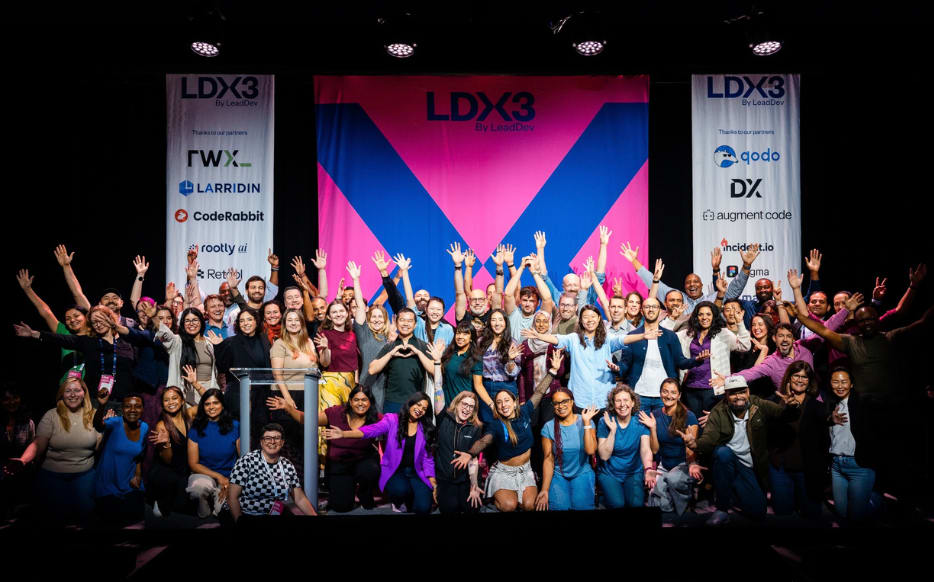
New York • September 8 & 9, 2027
Loved LDX3 New York? Pre-sale tickets for 2027 are now available.
AI is enhancing engineering careers
Engineers who embrace AI and learn to use it effectively are more likely to thrive, and this mindset can also support women in advancing within the evolving industry.
BairesDev’s research found that 72% of respondents use generative AI in their development process, with nearly half using it daily. Of these, 71% note productivity increases of 10–25%, while 23% see gains of 50% or more. This suggests that those who adopt and learn AI tools benefit in their everyday work.
Engineering leaders seeking new roles who possess deep AI expertise – particularly those with experience at AI-native startups or in developing AI-driven products and models – are highly sought after, claimed Jossie Haines, a former VP of software who now works as an executive coach for engineering leaders and women in tech .
According to Hays’ research, 39 % of tech employers say expertise in AI is the most in‑demand specialist tech skill today, ahead of other core technical areas such as cloud, architecture, and advanced analytics.
The rise of AI-first hiring
AI-first hiring is everywhere, and it’s not slowing down. In 2025, a job listing in for a Senior Engineer II, Backend role at security firm Abnormal AI (formerly Abnormal Security) included a requirement that didn’t exist until recently: “Familiarity with AI development tools such as Cursor, GitHub Copilot, or Claude.”
The listing explained how the company is building a team of top-tier engineers who are excited to use generative AI tools to “redefine how software is built – faster, smarter, and more efficient.”
Shrivu Shankar, a staff machine learning engineer at Abnormal AI who leads the generative AI team, said they included this on the job description to signal the kind of company they are, and the people they want to work with.